
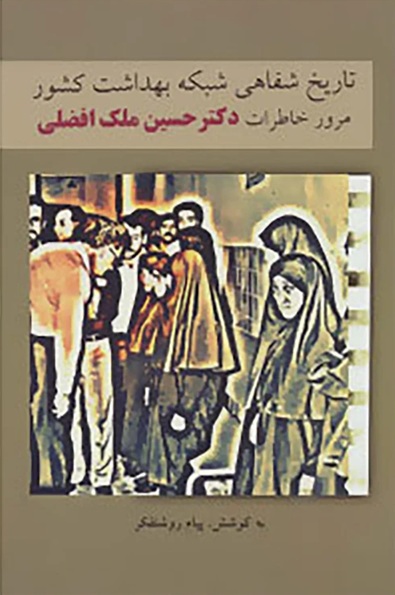
Oral History of the National Health Network: Memories of Dr. Hossein Malek-Afzali Ardakani is a research-based work focusing on the history of healthcare development and health policy in Iran. Compiled by Payam Roshanfekr and edited by Delaram Ali, the book was published in 2015 by Daricheh No Publishing House. The 274-page volume documents the experiences and memories of Dr. Hossein Malek-Afzali Ardakani regarding the formation, implementation, and expansion of Iran’s national primary healthcare network.
The significance of this book lies in the fact that the history of a healthcare system cannot be understood solely through laws, statistics, and official reports. Many important decisions, implementation challenges, disagreements, and local experiences remain absent from administrative records. Oral history provides an opportunity to preserve these less-visible aspects through the narratives of individuals directly involved in designing and implementing health policies. This book is based on approximately twelve hours of interviews with Dr. Malek-Afzali, whose accounts were later organized and edited into a structured narrative.
Dr. Hossein Malek-Afzali Ardakani is recognized as one of the influential figures in the establishment of Iran’s primary healthcare network. His professional contributions include supporting the development of the health network system, advancing medical and public health research, and establishing population research centers and initiatives. Accounts of the early years of the health network indicate that he and his colleagues played an important role in expanding rural health houses, training community health workers (Behvarz), improving healthcare access in underserved areas, and gaining institutional support for this model.
The central theme of the book is the transformation of an idea into a nationwide healthcare structure. Readers encounter a collection of managerial, social, and operational experiences, including identifying rural health challenges, addressing shortages of healthcare personnel, training local health workers, establishing rural health houses, and creating connections between different levels of healthcare delivery. In this narrative, the health network is presented not merely as an administrative structure, but as a practical response to inequalities in access to health services.
Iran’s health network model was built around the provision of primary healthcare, particularly in rural and underserved communities. Health houses and local community health workers became the first point of contact between citizens and the healthcare system, while higher-level health centers provided more specialized services and supervised the activities of health houses. International organizations have also recognized Iran’s primary healthcare network and the Behvarz program as significant regional experiences in expanding access to essential health services.